In most offices, yes. Decorative window film for offices gives clear glass the look of frosted, etched, or patterned glass, adds privacy where people need it, and marks glass walls and doors so nobody walks into them, all without replacing a single pane. It is applied to the surface of the glass you already have, it can be cut into stripes, gradients, logos, or fully custom designs, and it can be removed later if the layout changes or a new tenant moves in. For a conference room, a manager’s office, a reception wall, or a storefront, that makes it one of the quickest ways to change how a space looks and works. At Professional Window Tinting we install decorative films for offices, medical practices, and retailers across Delaware and Maryland, and this guide covers what decorative film can do, where it fits, how it compares to frosted glass and smart film, and what to plan before an install.
Table of Contents
- What Decorative Window Film Is
- Why Offices Choose Film Over Frosted Glass
- Common Uses of Decorative Window Film for Offices
- Design Options
- Decorative Film vs Smart Film
- Planning an Office Install
- Frequently Asked Questions
What Decorative Window Film Is
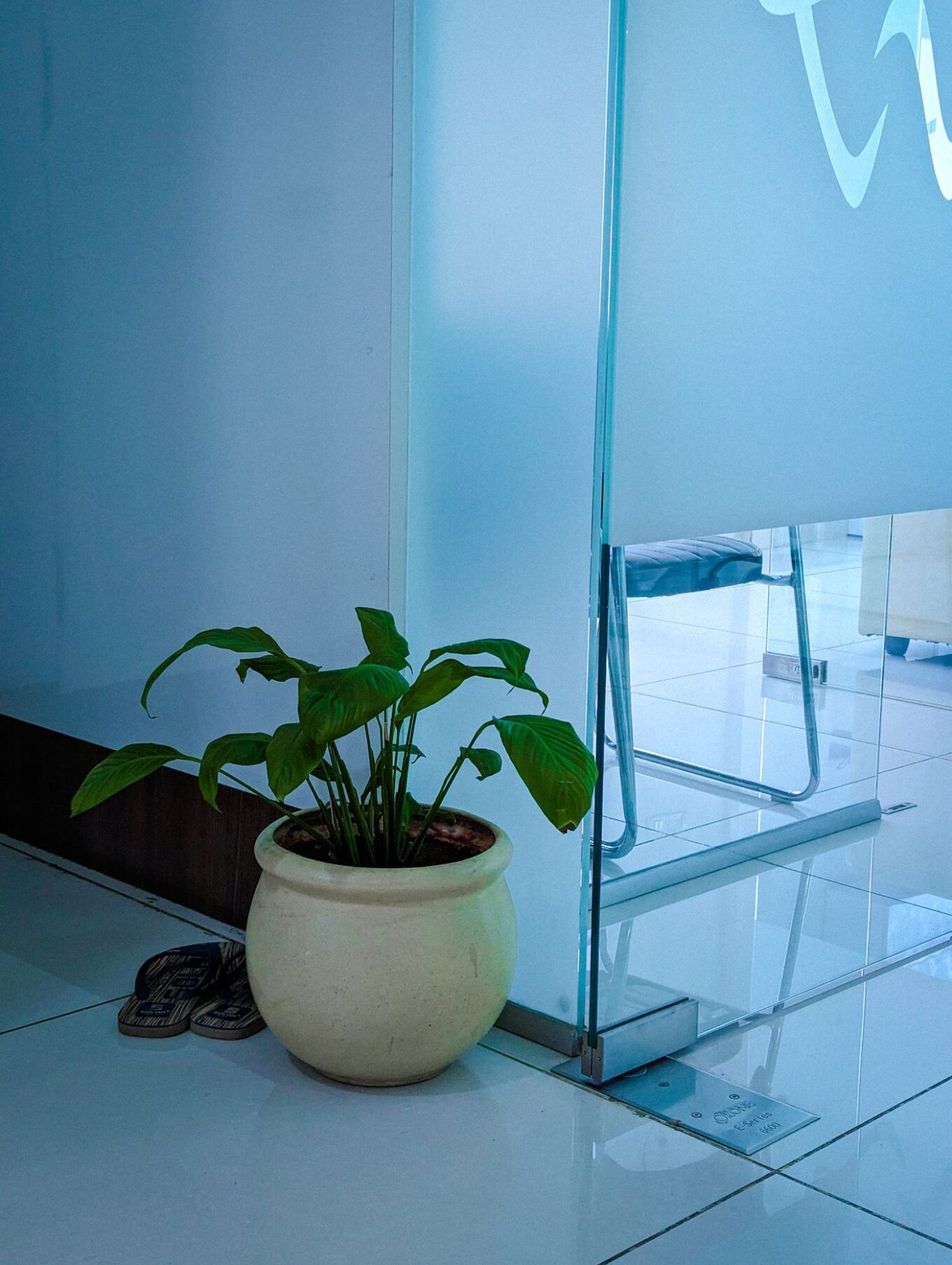
Decorative film is a thin polyester film with a frosted, etched, textured, colored, or printed finish. Applied to clear glass, it changes how the glass looks and how much you can see through it. Some decorative films are fully opaque. Others are translucent, so light still passes through while detail is blurred. Many also block most of the UV light that fades carpets, furniture, and finishes.
We install decorative lines including 3M Fasara, known for its realistic etched and textured glass looks, and Solyx, which offers a wide range of patterns and finishes. The International Window Film Association’s page on window film aesthetics gives a good overview of what decorative films can do.
Why Offices Choose Decorative Window Film Over Frosted Glass
Replacing clear glass with frosted glass is a construction project. The old panes come out, new glass is ordered and delivered, and the space is disrupted while the work happens. If the layout changes a few years later, you are stuck with the frosted glass or you replace it again.
- Less disruption. Film goes on the existing glass, usually in a day or less for a typical office, and often after hours.
- More design choice. Film can be a solid frost, a band at eye level, a gradient, a pattern, or a custom design with your logo.
- Easy to change. When a tenant moves out, a brand changes, or a room gets a new purpose, film can be removed and replaced.
- Added benefits. Film blocks most UV and helps hold glass fragments together if a pane breaks.
Common Uses of Decorative Window Film for Offices
Conference rooms and private offices
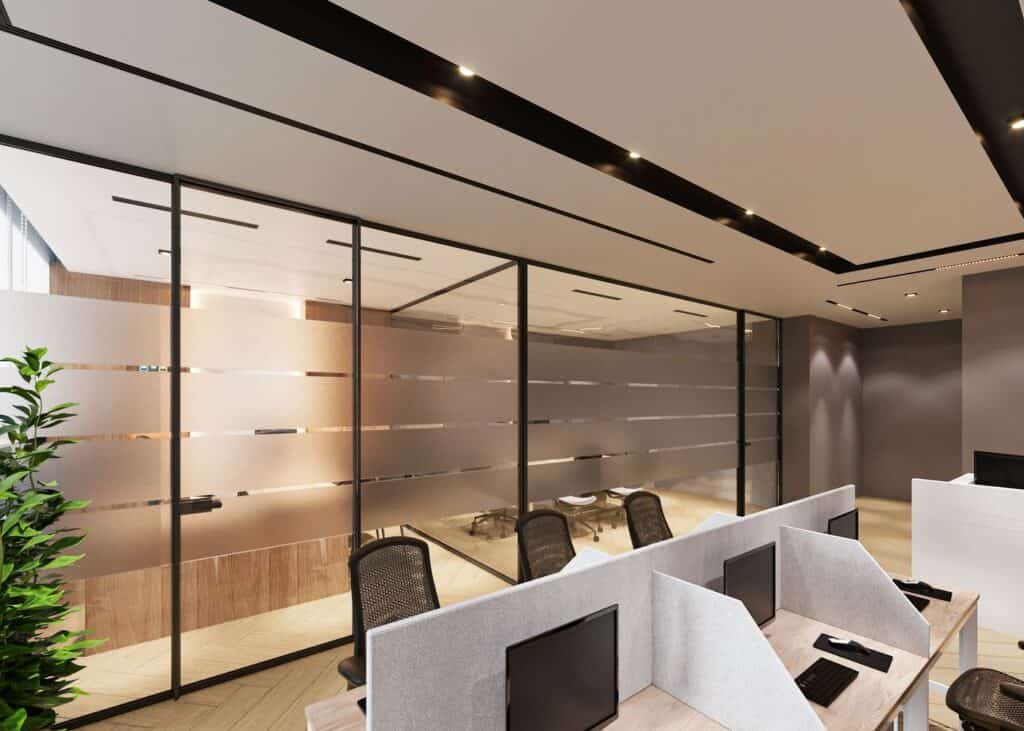
A frosted band across the middle of a glass wall blocks the view of people seated at a table and screens, while the top and bottom stay clear to keep light moving through the space. It is the most common office request we get.
Glass doors and walls people walk into
Clear glass doors and full-height glass walls can be hard to see, especially in a bright lobby. A strip of frosted film, a line of dots, or a logo at eye level makes the glass visible so people do not walk into it.
Reception and storefront branding
A logo cut from frosted film on the entry door or reception wall looks like etched glass with far less disruption than etching.
Medical, legal, and HR spaces
Consultation rooms, exam rooms, and HR offices need privacy that clear glass does not provide. Film blocks the view without making the room feel closed in.
Break rooms, wellness rooms, and restrooms
Rooms used for breaks, nursing, or quiet time need full privacy without turning into a windowless box. A solid frost or an opaque film on a glass door or sidelight gives people the privacy they expect while keeping the hallway bright. Restroom and locker room windows that face a parking lot or a neighboring building are another common fix.
Design Options
- Solid frost. Full privacy with soft, diffused light.
- Bands and stripes. Privacy at seated and standing eye level with clear glass above and below.
- Gradients. Frosted at the bottom fading to clear at the top, or the reverse.
- Patterns and textures. Dots, lines, geometric shapes, and textures that mimic etched or textured glass.
- Custom designs. Logos, wayfinding, room names, and artwork cut or printed to order.
Diffused light is an underrated benefit. Frosted and translucent films soften harsh daylight, which can help with screen glare in some layouts. OSHA’s page on the computer workstation environment covers why glare and lighting matter for people at desks.
Decorative Film vs Smart Film
Decorative film is always on. If a space needs privacy all the time, it is simple, has no wiring, and comes in almost any look you want. If a room needs to be clear sometimes and private other times, switchable smart film may be a better fit. Our post on how smart film works explains the difference, and many offices use both: smart film for the main conference room and decorative film everywhere else.
Planning an Office Install
- Walk the space. Decide which glass needs privacy, which needs visibility markings, and which should stay clear.
- Pick a look. Choose finishes and patterns, and decide whether you want branding or a custom design.
- Check with your landlord. In a leased space, confirm whether film needs approval and whether it must be removed at the end of the lease.
- Schedule around work. Many office installs happen after hours or on weekends to avoid disruption.
Decorative film is easy to live with once it is up. Clean it with a soft cloth and a mild, non-abrasive cleaner, the same way you would clean the glass, and keep scrapers, abrasive pads, and harsh chemicals away from the film side. In most offices it sits on the inside of the glass, so it is protected from weather. Keep a note of the film name and pattern so a damaged panel can be matched later, and plan for professional removal when a lease ends so the glass is returned clean.
Our decorative and privacy film page shows examples, and our commercial window film page covers other films businesses combine with decorative film, like solar control and security.
Frequently Asked Questions
Does decorative film still let light through?
Most frosted and patterned films let light through while blurring the view. Opaque films are available when you need to block both.
Can decorative film be removed?
Yes. It can be professionally removed, which makes it a good fit for leased spaces and offices that change layouts.
Can you put our logo on the glass?
Yes. Logos and custom designs can be cut from frosted film to look like etched glass, or printed in color.
Is decorative film private at night?
A frosted film blocks detail day and night, but strong lighting on one side can show soft shapes. Opaque films block more if that matters.
How long does an office install take?
It depends on how much glass there is and how detailed the design is. Simple frosted bands on a few conference rooms often take part of a day, while custom logos and full floors take longer. We give you a schedule before we start.
Ready to Update Your Office Glass?
Professional Window Tinting installs decorative window film for offices from our Newark, DE and Baltimore locations. Request a free quote and we will help you plan the look and the privacy your space needs.