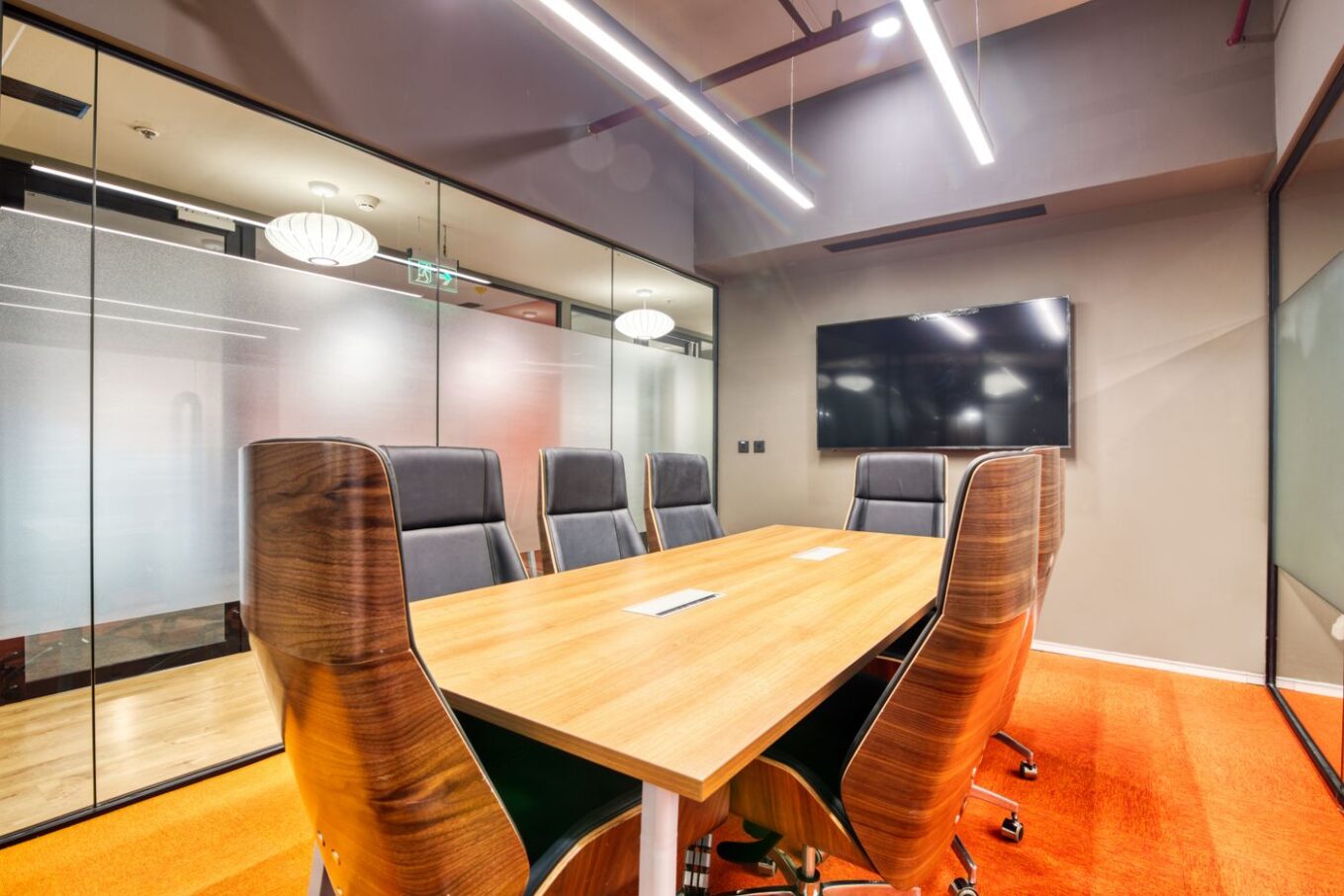
Switchable privacy film, usually called smart film, is a thin film applied to glass that changes from frosted to clear when electricity is switched on, and back to frosted when it is switched off. Inside the film is a layer of liquid crystals. With no power, the crystals sit in random directions and scatter light, so the glass looks like frosted glass: bright, but you cannot see through it. When power is applied, the crystals line up and let light pass straight through, and the glass turns clear. That is the whole trick, and it is why a glass conference room, a medical exam room, or a bathroom window can go from open to private in a second without blinds, curtains, or replacing the glass. At Professional Window Tinting we install smart film for homes and businesses from our Newark, DE headquarters and our Baltimore location, and this guide covers how it works, where it makes sense, what installation involves, and how it compares to regular privacy film.
Table of Contents
- How Switchable Privacy Film Works
- Where Smart Film Makes the Most Sense
- What Installation Involves
- What Smart Film Does Not Do
- Smart Film vs Static Privacy Film
- Questions to Ask Before You Buy
- Frequently Asked Questions
How Switchable Privacy Film Works
Most smart film uses a technology called polymer dispersed liquid crystal, or PDLC. Tiny droplets of liquid crystal are suspended in a polymer layer, sandwiched between two thin conductive films. Those conductive layers carry a low electrical current across the whole surface once the film is wired to a power supply.
Off means private
With the power off, the liquid crystals point every which way. Light hitting the glass scatters in all directions, so the glass glows with daylight but shapes behind it disappear. This is the default state of most smart film, which means a room stays private if the power goes out.
On means clear
With power applied, the crystals line up with the electrical field, light passes straight through, and the glass looks close to ordinary clear glass. Flip the switch back and the room goes private again. Depending on the system, the film can be controlled by a wall switch, a remote, or a connection to building or home controls.
Where Smart Film Makes the Most Sense
Smart film earns its place wherever a space needs to be open most of the time and private some of the time. Those are the jobs static film and blinds handle awkwardly.
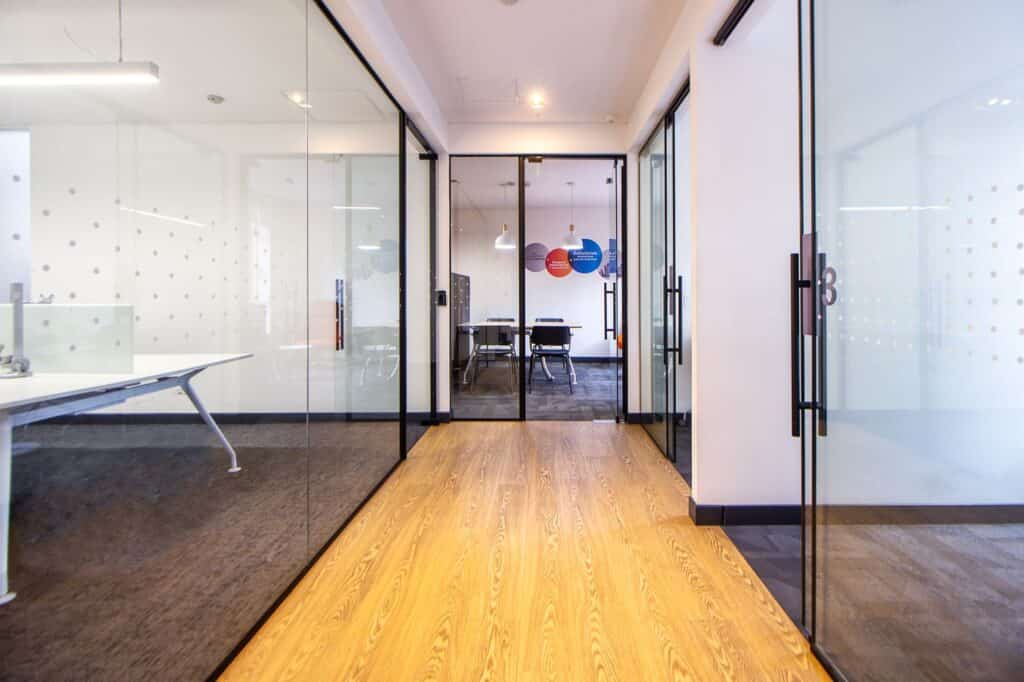
- Conference rooms and private offices. Glass walls keep an office bright and open, but meetings, reviews, and HR conversations need privacy. Smart film gives you both in the same wall.
- Medical and dental offices. Exam and consultation rooms with glass can go private while a patient is inside and clear when the room is empty.
- Bathrooms and bedrooms at home. A bathroom window or glass shower enclosure can stay clear for the view and frost for privacy.
- Storefronts and lobbies. Some businesses use smart film to hide a space after hours or to reveal a display when the store opens.
- Presentation spaces. In its frosted state the film diffuses light well enough that many installations use it as a rear projection surface for presentations.
Our smart film page shows how Ghost Glass, our switchable film, looks installed in both states. For business spaces, it often gets paired with other films covered on our commercial window film page.
What Installation Involves
Smart film is more involved than a standard window film because it has an electrical side. The retrofit version is a self-adhesive film applied to the inside of existing glass, which means you usually do not have to replace the glass to get switchable privacy. A typical project looks like this.
- Measure and plan. Each pane is measured precisely, because smart film is made to size for each piece of glass rather than trimmed on site like standard film.
- Plan the wiring. Each panel needs a connection at its edge and a route back to a power supply and control. Where those wires run, and how they are hidden in the frame, is decided up front.
- Clean and apply. The glass is cleaned thoroughly and the film is applied, much like other films but with more care at the edges where the connections sit.
- Connect and test. The panels are connected to the power supply and controls, and every panel is tested in both states.
Because the film is made to size, the ordering step adds lead time compared to a standard tint job. Planning for that early keeps a renovation or office build-out on schedule.
What Smart Film Does Not Do
Smart film is impressive, but it is worth being clear about its limits so you pick the right product for the job.
- It is not a blackout. Frosted mode blocks the view, not the light. A room still glows with daylight, and at night bright lights inside can show soft shapes and shadows through the glass.
- It is not a heat control film by default. If a room also has a heat or glare problem, that may call for a separate solar control film or a combined approach.
- It needs power to be clear. The film uses electricity whenever it is in the clear state, and it needs a power supply and control wired in.
- It is not a security film. Smart film is about privacy. Holding broken glass together is the job of a safety and security film.
Smart Film vs Static Privacy Film
If a window or wall needs to be private all the time, a static frosted or decorative film is simpler. It has no wiring, no power supply, and no controls, and it comes in patterns, gradients, and custom designs. Our decorative and privacy film page shows the range, and our post on privacy window film options compares them in more detail.
Smart film is the better fit when the need for privacy changes during the day. The International Window Film Association’s page on privacy and glare is a good general overview of how different films handle privacy, and we are glad to walk you through the choice on site.
Questions to Ask Before You Buy
- Does this space need privacy all the time, or only some of the time?
- Where can power reach each pane, and how will the wiring be hidden?
- How do you want to control it: a switch, a remote, or building controls?
- Does the glass also have a heat, glare, or UV problem to solve?
- What type of glass is it? Single pane, insulated, and laminated glass each deserve a look before any film goes on. The NFRC consumer guide to windows explains the common window types, and our post on film on insulated glass covers what we check.
Frequently Asked Questions
Is smart film frosted or clear when the power is off?
In most smart film, off means frosted and private, and on means clear. That way a room defaults to privacy if the power is interrupted.
Can smart film go on glass I already have?
Usually, yes. Retrofit smart film is applied to the inside of existing glass, so most projects do not require new glass. We check each pane before recommending it.
Does smart film work in a home, or only in offices?
Both. Bathrooms, bedrooms, and street-facing windows are common home uses. Our residential window films page covers other home options too.
Can I see through it at night when it is frosted?
Not clearly. Frosted mode blocks detail, but strong lighting inside a room at night can show soft shapes and shadows, the same as frosted glass.
Want Privacy at the Flip of a Switch?
Professional Window Tinting installs Ghost Glass smart film for homes and businesses across Delaware, Maryland, and southern Pennsylvania. Request a free quote and we will look at your glass, your wiring options, and how you want the space to work.