Security window film in Baltimore does one job well: it holds shattered glass together so a window that gets hit stays in its frame instead of falling in, which turns a ten-second smash-and-grab into a loud, slow, visible struggle that most intruders abandon. It is a thick, optically clear polyester film bonded to the inside of the glass, often anchored to the frame with a structural attachment system, and it also blocks 99 percent of UV and holds glass together in a storm or an accident. Professional Window Tinting has installed 3M security films on Baltimore storefronts, offices, schools, and homes from our Baltimore location for years, and this guide explains what the film does, what it does not do, how to choose a thickness, and what to expect from an install.
Table of Contents
- The Short Answer
- What Security Window Film Actually Does
- Why Baltimore Storefronts and Homes Ask for It
- Security Window Film Baltimore: Film, Attachment, and Glass Together
- What It Will Not Do
- Choosing the Right Thickness
- What Installation Looks Like
- Security Film vs Replacing the Glass
- Why a 3M Platinum Dealer Matters
- Security Window Film Baltimore Case Notes: Three Common Properties
- How to Get Started in Baltimore
- Frequently Asked Questions
The Short Answer
Most calls for security window film Baltimore property owners make to us start with an incident: a broken storefront window on a Saturday night, a rear patio door forced open, a school or church that had a scare and wants a plan. The film is the fastest, least disruptive way to make existing glass harder to get through. It goes on in a day, it does not change how the window looks from the street, and it works on the glass you already have. Our Baltimore window tinting team handles the assessment and the install from our local office.
The honest framing is this: security film buys time and makes noise. It does not make glass impenetrable, and anyone who tells you it does is selling something. What it does is turn glass from the weakest point of a building into a point that takes minutes of effort and attention to breach, and most break-ins do not survive that.
What Security Window Film Actually Does
Ordinary annealed glass breaks into sharp shards that fall out of the frame on the first blow. Tempered glass, common in patio doors and storefronts, breaks into small cubes and collapses entirely. In both cases the opening is clear within a second or two. Security film changes what happens after the glass breaks. The film is bonded across the full inside surface, so the broken glass stays stuck to it, and the film holds the broken sheet in the frame. To get through, an intruder has to keep hitting a sheet that flexes and absorbs the blows, then cut or tear through the film itself.
Security films are far thicker than solar films: 4 mil is the entry point, 8 mil is the common commercial choice, and 12 to 14 mil films are used where the threat is higher. The thicker the film, the more energy it absorbs and the longer the glass stays in the frame. Our post on anti-shatter window film explains the physics, and shatter-proof vs shatter-resistant clears up the language, because no film makes glass shatter-proof.
Why Baltimore Storefronts and Homes Ask for It
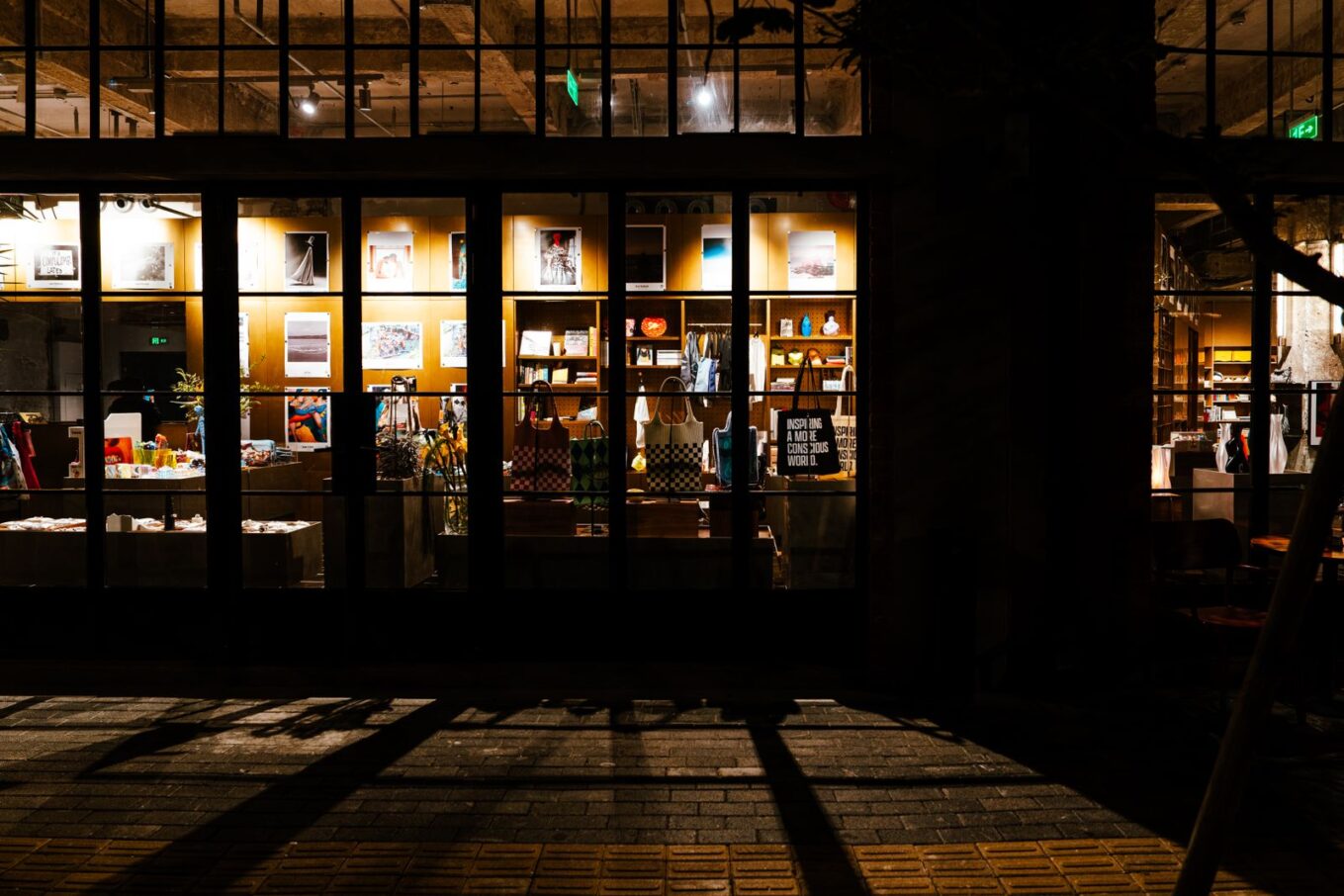
Baltimore has a lot of street-level glass. Rowhouse storefronts in Hampden, Fells Point, and Canton, ground-floor offices downtown, and pharmacies, cell phone stores, and restaurants across the county all put their most visible assets behind a single pane. City of Baltimore publishes crime statistics that business owners can review for their own block, and the pattern our customers describe is consistent: smash-and-grab burglaries that take under a minute, and repeated hits on the same storefront once it has been shown to be easy.
Homes have the same weak point at the rear. Sliding patio doors and basement windows are the entry point in a large share of residential break-ins, because they are out of sight and easy to break quietly. Security window film Baltimore homeowners install on those doors is often the whole difference, and it is far less visible than bars. We cover the retail side in detail in security window film for Baltimore retailers and the residential side on our Baltimore home window tinting page.
There is a second reason Baltimore-area properties ask for it: weather and accidents. A film that holds glass together in a break-in also holds it together when a branch comes through in a storm, when a ball hits a school window, or when a shopping cart hits a storefront. Schools and churches in the region install it as much for accident and storm protection as for intrusion, which is the subject of our post on security window film for Maryland schools.
Security Window Film Baltimore: Film, Attachment, and Glass Together
The film is one part of a system, and the system is what performs. Three pieces work together.
- The film. Thickness and tear strength decide how much energy the broken glass can absorb and how long it holds.
- The attachment. On its own, a filmed pane can eventually be pushed out of its frame as a whole sheet. A structural attachment system, a bead of specialized silicone or a mechanical strip that bonds the film to the frame, anchors the sheet so it cannot be pushed in. On commercial glass and any high-risk opening, we recommend it.
- The glass and frame. Film performs best on annealed or heat-strengthened glass in a sound frame. Tempered glass benefits too but behaves differently when it breaks. An assessment tells us which you have.
When a customer asks about security window film Baltimore installers sometimes quote film alone and skip the attachment, because it is faster. The film still helps, but the difference in performance between film alone and film with attachment is large enough that we walk every commercial customer through it. Our glass door security film post shows how it applies to the most common target, the entry door.
What It Will Not Do
Being straight about limits is part of doing this work well.
- It is not bulletproof. Security film is not rated to stop bullets, and no window film is. Our post on whether window film is bulletproof addresses the myth directly. Ballistic protection is a different product category.
- It does not stop a determined attacker with time and tools. It stops the fast, opportunistic break-in and makes the determined one loud and slow.
- It does not strengthen a weak frame. A flimsy aluminum storefront frame is still the weak point; the assessment looks at the frame, not just the glass.
- It does not replace an alarm, lighting, or cameras. It works with them, by holding the intruder in view of the camera and in earshot of the neighbors long enough for the alarm to matter.
- It does not stop a window from breaking. The glass still breaks. It stays in place.
Choosing the Right Thickness
The right thickness depends on what is behind the glass and how it has been threatened.
- 4 mil: residential windows where the goal is to slow a break-in and hold glass together in a storm or accident. Also common for schools and offices as a baseline.
- 8 mil: storefronts, ground-floor commercial, pharmacies, and any home that has been hit before. The most common commercial choice, usually with an attachment system.
- 12 to 14 mil: high-value retail, government and institutional glass, and situations where a blast or forced-entry rating is required. Always with an attachment system.
Thicker film is slightly more visible at the edge and takes longer to cure, and all of them are optically clear once installed. We also combine security film with solar control in a single product for west-facing storefronts that want heat rejection too, which our post on the ROI of commercial window film in Baltimore covers. Cost depends on glass size, thickness, and attachment, and our window security film cost post explains what drives the estimate without quoting numbers that would not fit your building.
What Installation Looks Like
A security film install from our Baltimore location follows the same steps whether it is one patio door or a two-story storefront.
- Assessment. We measure every pane, identify the glass type, inspect the frames, and note which openings are the likely targets. Rear doors and out-of-sight windows get priority.
- Scheduling. Commercial installs happen after hours or in sections so the business stays open. Residential installs are usually a single day.
- Prep. Glass is cleaned to bare, twice. Any contamination under a thick film shows, so this step is slow on purpose.
- Application. The film is applied wet, squeegeed, and trimmed to a precise edge gap. On thick films the crew works in pairs on large panes.
- Attachment. Where specified, the structural silicone or mechanical strip is applied to bond film to frame.
- Cure. Security film takes longer to cure than solar film, often 30 days or more for thick products. The haze and small water pockets that appear during cure clear on their own.
The finished glass looks like glass. Customers routinely forget which windows have it until something hits one. Our glass protection page covers the full range of protective films we install, and the International Window Film Association publishes independent guidance on what to expect from a professional installation.
Security Film vs Replacing the Glass
Property owners sometimes weigh security film against replacing windows with laminated or impact-rated glass. Laminated glass is excellent and is the right answer for new construction and full renovations. For existing buildings, film delivers most of the same protection on the glass already in place, in a day, without touching the frame, the facade, or a historic district review. Many Baltimore rowhouse storefronts sit in historic districts where replacement glass is a permitting project; film is invisible and reversible. The math is different for every building, and we will say so when replacement is the better call.
Why a 3M Platinum Dealer Matters
Professional Window Tinting is a family-run 3M Authorized Platinum Dealer, founded in 1989 and headquartered in Newark, Delaware, with a Baltimore location serving the city and county. Platinum status means our installers are trained and audited by 3M, we install genuine 3M security films with attachment systems engineered to work with them, and the work carries the 3M manufacturer warranty. When a customer searches for security window film Baltimore has a number of installers to choose from; the 3M products, the attachment systems, and the crew that has been doing this since 1989 are what we bring. Our Baltimore commercial window tinting page covers the commercial side and our service areas page lists everywhere we install.
Security Window Film Baltimore Case Notes: Three Common Properties
The best way to understand what security film does is to walk through the properties we see most from our Baltimore location. These are composites of typical jobs, without names or figures.
- A corner pharmacy in the city. Two large storefront panes and a glass entry door, hit twice in a year. Assessment found tempered storefront glass in a sound aluminum frame. Installed 8 mil security film with a structural attachment on all street-facing glass and the door, after hours over two nights. The next attempt left a cracked, sagging pane still in its frame and nothing missing.
- A rowhouse in the county with a rear sliding door onto an alley. Assessment found a standard tempered slider out of sight of the street. Installed 8 mil film on the slider and a basement window, with attachment on the slider. The homeowner added a light. The door is now the hard way in, which is the point.
- A private school in Baltimore County. Ground-floor classroom windows and a glass vestibule. Installed 8 mil film with attachment on the vestibule and 4 mil on classroom glass for accident and storm protection, scheduled over a school break. The film also blocks 99 percent of UV, which the facilities director counted as a second benefit.
In each case the assessment came first, the thickness and attachment were matched to the opening, and the work happened without closing the property. That is what security window film Baltimore customers should expect from any installer, and it is the standard our crew has kept since Steve started running installs after years in the Baltimore detailing trade. Our Baltimore window tinting page has the local contact, and the Maryland schools post goes deeper on institutional glass.
If you are searching for security window film Baltimore has options, and the differences come down to the film brand, whether an attachment system is included, and whether the installer is trained and audited by the manufacturer. Ask those three questions of anyone who quotes the work. The answers from Professional Window Tinting are 3M, yes when the opening calls for it, and yes since 1989.
How to Get Started in Baltimore
- Call or send photos of the glass you are worried about. Storefront, entry door, rear slider, or ground-floor windows.
- A technician from our Baltimore location visits, measures the glass, checks the frame, and recommends a film thickness and whether an attachment system is warranted.
- Installation is scheduled around your hours. Storefronts are typically done after close, homes in a single day.
- The 3M warranty is registered in your name, and the crew walks you through what the film will and will not do.
That is the whole process. Security window film Baltimore property owners can trust starts with an honest assessment, and Professional Window Tinting has been giving them since 1989.
One more consideration for Baltimore properties with older glass. Rowhouses and pre-war commercial buildings often have single-pane annealed glass in wood or steel frames, and that glass breaks into large sharp shards rather than the small cubes tempered glass produces. Security film on annealed glass is, if anything, more valuable, because it holds those shards together. The assessment includes a check of the frame’s condition, since a wood frame that has rotted at the sill cannot anchor an attachment system until it is repaired. Our technicians flag that during the visit so the film is installed on a frame that can do its job.
Frequently Asked Questions
Does security window film really stop break-ins?
It stops the fast ones and slows the rest. Broken glass stays in the frame, so an intruder has to keep working in full view and full hearing. See security film for Baltimore retailers for how that plays out on a storefront.
Is security window film visible?
No. It is optically clear once cured. Thick films have a slightly visible edge on close inspection. Our residential window films page shows the options for homes.
How much does security window film cost in Baltimore?
It depends on glass size, film thickness, and whether an attachment system is specified. Our post on window security film cost explains the factors, and a free assessment gives you a real number. Request a quote to schedule one.
Can security film be combined with tint for heat and glare?
Yes. Combination films provide security and solar control in one layer, common on west-facing storefronts. Our commercial window film page covers the options.
Ready to Make Your Glass the Hard Part?
Professional Window Tinting installs 3M security window film for Baltimore storefronts, offices, schools, and homes from our Baltimore location, with the Newark, DE headquarters serving Delaware and southern Pennsylvania. Request a free assessment and we will show you which openings matter most.