





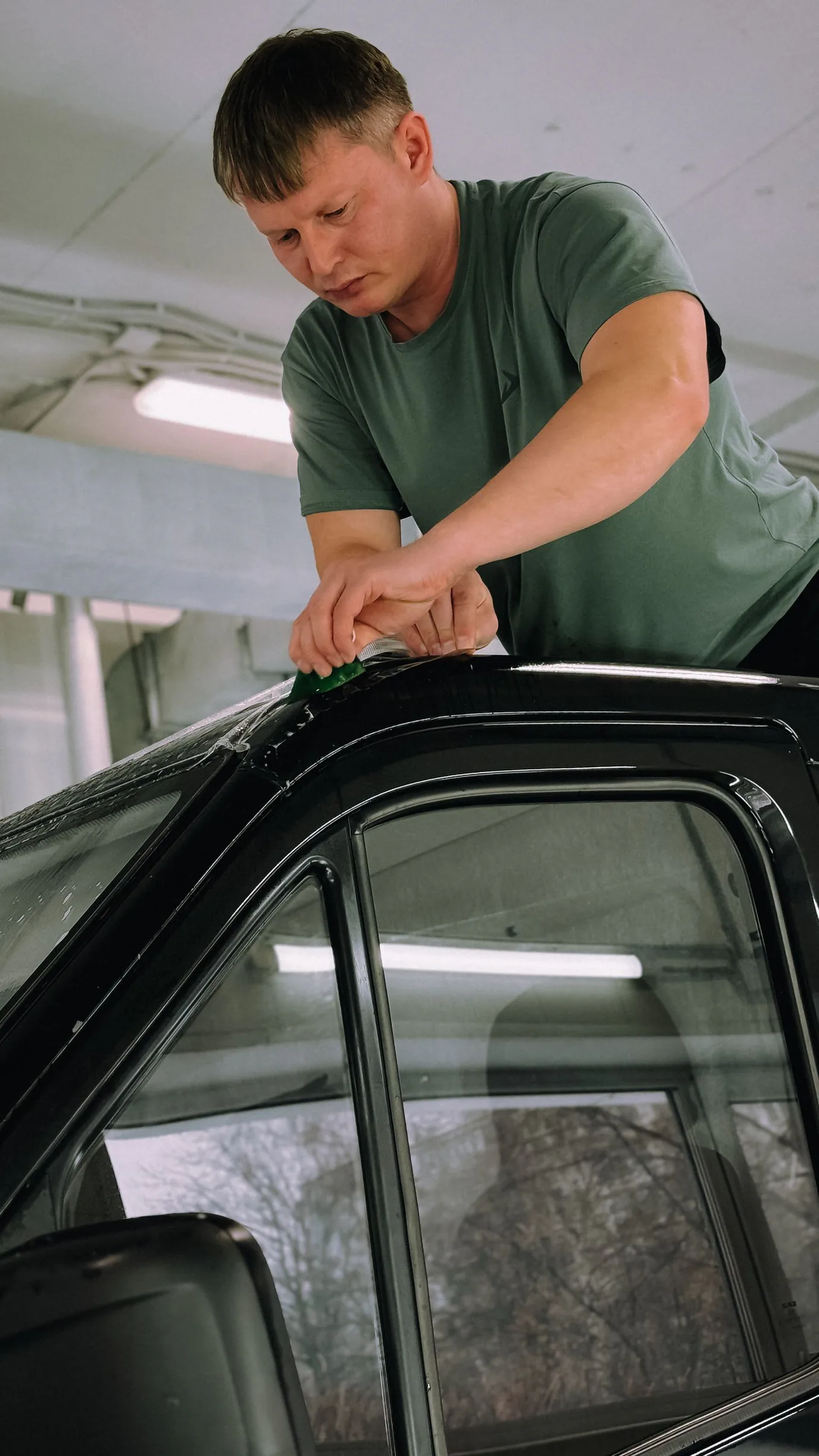
How long does car tinting take comes down to three things: how many windows are being done, what shape that glass is, and whether there is old film that has to come off first. A full tint on a typical sedan with clean bare glass is a matter of hours, not days, and you are usually driving away the same day. Add a curved rear window with defroster lines, a vehicle with awkward door glass, or a previous tint job that has to be stripped, and the same appointment stretches considerably. Removal is the variable that surprises people most, because pulling failing film off a rear defroster is slow, careful work that cannot be rushed without damaging the grid. Then there is the cure period afterward, which is not shop time but is part of the answer.
Table of Contents
- What Actually Takes the Time
- Vehicle Differences That Matter
- What Happens After You Drive Away
- How to Make the Appointment Go Faster
- Frequently Asked Questions
What Actually Takes the Time
Very little of a tint job is applying film. Most of it is preparation, and preparation is what separates work that lasts from work that bubbles in two summers.
Glass has to be cleaned properly, inside and out, including the edges where the glass meets the seal. Film has to be cut and shaped to each window, and on curved glass it has to be heat shrunk to conform before it goes on. Then it is applied, squeegeed out, and the edges are finished. Anyone quoting you a dramatically shorter time than everyone else is skipping one of those, and the one they skip is usually cleaning.
Contamination is permanent in a way that surprises people. A speck of dust trapped between the film and the glass does not work its way out during curing and cannot be wiped off afterward, because it is sealed under the film. The only fix is pulling that panel and redoing it. That is why a proper shop works in a controlled indoor space rather than outside, and why the cleaning step takes longer than the application step on most vehicles.
Removing Old Film Is the Big Variable
If your vehicle already has tint, it has to come off before new film goes on. Film in good condition comes off reasonably. Film that has failed, gone purple, or turned brittle comes off in pieces, and the adhesive stays behind.

The rear window is where this gets slow. Those defroster lines are printed on the inside surface, exactly where the film and adhesive are, and an aggressive scrape ruins them. Doing it properly means heat, patience, and working around the grid rather than through it. It is worth knowing this before you drop the car off so the timeline does not come as a surprise, and it is one more reason quality film matters the first time, which we covered in the difference between high and low quality automotive film.
Vehicle Differences That Matter
- Window count. Two front windows is a short appointment. A full SUV with a third row and quarter glass is not.
- Rear glass curvature. A steeply curved backlight takes real shrinking work.
- Door design. Some vehicles need panels removed for a clean edge at the bottom of the glass.
- Moldings and trim. Tight or aggressive seals slow the finish work.
- Sunroof or panoramic roof, if you are including it.
Film choice affects the result rather than the clock. A ceramic film does not take meaningfully longer to install than a basic dyed film, it just performs differently once it is on, which we go through in ceramic window tint for cars. Paint protection film is a different service entirely with its own timeline, covered on our paint protection film page.
What Happens After You Drive Away
Tint is installed wet, so there is a cure period while the last moisture evaporates out through the film. During that time you may see haze or small water pockets, and both clear on their own. The one rule that matters is not rolling the windows down until your installer tells you it is safe, because the film edge is still bonding and the seal will catch it.
Cure time varies with weather, so a November install takes longer to clear than a July one. We go through the whole thing in window film curing time and the care routine in auto window tinting aftercare.
How to Make the Appointment Go Faster
A few things on your end genuinely help. Tell the shop up front if the vehicle already has film, because that changes the schedule and an unexpected removal can push other appointments. Clear personal items out of the vehicle, especially anything on the rear deck or against the door panels. Decide on your film before you arrive rather than in the lobby.
And know the rules where you drive. Window tint is regulated by state, the limits differ, and they apply to different windows differently, so check with your own state before choosing a level. In Maryland that is the Motor Vehicle Administration, and we will talk through what is allowed for your vehicle and where you register it. One benefit that does not depend on darkness is worth knowing: quality film blocks the large majority of ultraviolet light regardless of how light or dark it looks, and the American Academy of Ophthalmology covers why that exposure matters for the arm and face on the driver’s side.
Frequently Asked Questions
So how long does car tinting take, start to finish?
For a standard sedan on bare glass with no removal, plan on part of a day and expect to drive away the same day. Add a curved rear window, extra glass on a large SUV, or old film that has to come off, and it grows from there. We give you a realistic window when you book rather than a best case, because a shop that promises everyone the fastest time is either rushing the prep or running late all day.
Can I wait at the shop?
For a straightforward job on bare glass, often yes. If old film has to come off, plan to leave the vehicle. Ask when you book and we will tell you honestly rather than having you sit for hours.
Can I get just the front two windows done?
Yes, and it is a common request, usually to match factory privacy glass in the back. Note that front side windows are where state limits are strictest, so that is the conversation to have before booking.
Is there a best time of year to have it done?
Installation quality is the same year round. Warm weather simply means a faster cure. Plenty of people book in the off season specifically because scheduling is easier, which we touched on in preparing for summer with auto window tint.
What if I only need one window redone?
That is a short appointment, though matching an existing film that has aged can be imperfect. If the rest of the car’s film is failing, doing it all at once usually gives a better result.
Tell Us the Vehicle
Year, make, model, and whether it already has film is enough for us to give you a realistic time and get you on the schedule. See our automotive films page or request a quote.
