


Contents
- High vs. Low Quality Automotive Window Film: What You Need to Know
- Price vs. Quality: The Core Trade-Off
- The 4 Main Types of Automotive Window Film
- Side-by-Side Comparison
- Which Film Is Right for Your Vehicle?
- Frequently Asked Questions
- What is the difference between dyed and non-dyed window film?
- Will metal window tint interfere with my car’s electronics?
- What are Delaware’s window tint laws?
- Does 3M Crystalline really work better than darker films?
- How much does car window tinting cost in Newark, DE?
- Does window tint protect against UV rays?
High vs. Low Quality Automotive Window Film: What You Need to Know
Window tint pricing can range from $100 to $1,000 or more for a full vehicle installation. That gap is not random. It reflects real differences in film technology, longevity, and the protections built into each product. Here is how to make sense of the options, and how to choose the right film for your vehicle and budget. Watch the video, listen to the podcast, read the list: either way, if you’re in Newark, Delaware – we’re here to help.
Price vs. Quality: The Core Trade-Off
Not every driver needs the most expensive film on the market. If you plan to sell or trade in your vehicle within a year or two, a budget dyed film might do the job. It will reduce glare and offer basic UV blocking until the film begins to fade, purple, or bubble — which typically happens within two to four years.
If you plan to keep your vehicle long-term, the math changes quickly. Cheap film that fails early costs money to remove and replace. A quality film installed once, backed by a lifetime warranty, protects your investment for the life of the vehicle.
The 4 Main Types of Automotive Window Film
1. Dyed Film (Budget Grade)
Dyed film is the most common entry-level product on the market. It uses a layer of dye between the adhesive and protective coating to absorb solar heat and block light. The dye degrades over time from UV exposure, causing the film to fade, change color, or bubble.
- Lowest upfront cost ($100–$200 full vehicle in many cases)
- Does NOT interfere with electronics
- Heat rejection: low
- Warranty: limited or none
- Best for: short-term ownership, budget-first buyers
2. Metal Film
Metal films do not use dye, so they resist fading far better than dyed products. They reflect solar energy rather than absorbing it, which improves heat rejection. However, the metallic composition can interfere with GPS, satellite radio, tire pressure sensors, EZ-Pass transponders, and cell signals — particularly on newer vehicles with more onboard technology.
- Good heat rejection
- Fade resistant
- May interfere with electronics on modern vehicles
- Best for: older vehicles with minimal electronics
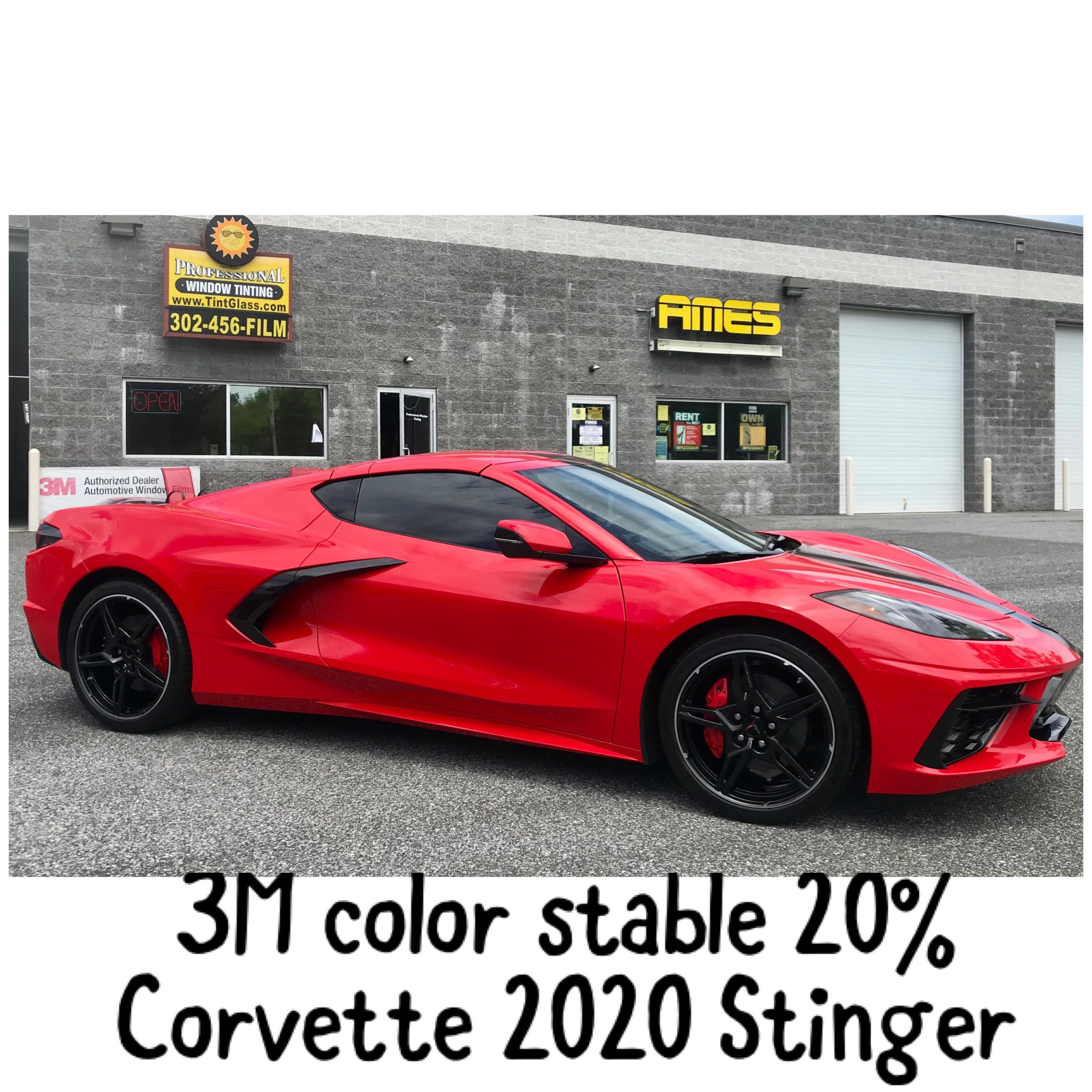
3. 3M Color Stable Film
3M Color Stable is a non-metal, color-stable film that eliminates the signal interference problem while delivering lifetime durability. It carries a lifetime warranty against cracking, peeling, purpling, bubbling, and fading. It is available in multiple visible light transmission (VLT) shades to meet Delaware and Maryland tint laws.
Delaware tint law note: Front side windows must allow more than 70% VLT. Rear side and back windows have no restriction. We verify compliance for every vehicle we service.
- Non-metal: safe for all electronics
- Lifetime warranty
- Multiple shades available
- Best for: newer vehicles, everyday drivers who want quality without top-tier pricing

4. 3M Crystalline Film
3M Crystalline is 3M’s premium automotive film and the product we most often recommend for customers who want maximum heat rejection without dark tint. It is the only patented multi-layer optical infrared film, built with over 200 nano-layers of film that work together to block infrared heat.
The lightest Crystalline shades reject as much heat as films two to three shades darker — allowing you to keep good visibility while still getting the thermal performance of a darker tint. Crystalline also carries an SPF rating of up to 1,000, offering significant protection from UV radiation that causes skin damage and interior fading.
- Over 200 nano-layers of film
- Highest heat rejection of any 3M automotive film
- Non-metal: no electronics interference
- SPF up to 1,000 (source: 3M product specifications)
- Lifetime warranty
- Starting price: $499+ depending on vehicle
- Best for: drivers who want light tint with premium heat rejection
Side-by-Side Comparison
| Film Type | Fade Resistant | Electronics Safe | Heat Rejection | Warranty |
| Dyed Film | No | Yes | Low | Limited/None |
| Metal Film | Yes | No (signal risk) | Moderate | Varies |
| 3M Color Stable | Yes | Yes | Moderate–High | Lifetime |
| 3M Crystalline | Yes | Yes | Highest | Lifetime |
Which Film Is Right for Your Vehicle?
The answer depends on three things: how long you plan to keep the vehicle, how much technology it has, and what you need from the film. If heat rejection is your main goal but you do not want to go dark, 3M Crystalline is worth the investment. If you want solid lifetime protection at a lower price point, 3M Color Stable is an excellent choice for most modern vehicles.
We serve automotive customers exclusively from our Newark, DE location. Baltimore customers: please note that we offer commercial and residential tinting in Maryland, but automotive services are only available at our Newark shop.
Frequently Asked Questions
What is the difference between dyed and non-dyed window film?
Dyed film uses an embedded dye layer that degrades over time, causing fading, color shift, and bubbling. Non-dyed films like 3M Color Stable use a stable, non-metallic composition that maintains color and clarity for the life of the vehicle.
Will metal window tint interfere with my car’s electronics?
It can. Metal films may disrupt GPS, satellite radio, cell reception, tire pressure monitoring systems, and toll transponders in modern vehicles. 3M Color Stable and Crystalline are both non-metal and carry no risk of electronics interference.
What are Delaware’s window tint laws?
In Delaware, front side windows must allow at least 70% visible light transmission (VLT). Rear side windows and the rear window have no minimum VLT requirement. We verify all installations comply with Delaware state law.
Does 3M Crystalline really work better than darker films?
Yes. Because it uses over 200 nano-layers to reflect infrared heat, lighter Crystalline shades can match or exceed the heat rejection of films with much darker VLT ratings. You get the performance of a dark tint without the reduced nighttime visibility.
How much does car window tinting cost in Newark, DE?
Pricing depends on the film type and the vehicle. Dyed films start around $100–$200 for a full vehicle. 3M Color Stable installations vary by shade and vehicle size. 3M Crystalline starts at $499 and goes up depending on the vehicle. Contact us for a free estimate specific to your car.
Does window tint protect against UV rays?
Yes. All quality window films block a significant percentage of UV radiation. 3M Crystalline carries an SPF rating of up to 1,000, making it one of the most protective automotive films available for UV exposure.
Ready to find the right film for your vehicle? Contact Professional Window Tinting in Newark, DE for a free estimate. We have served Delaware, Maryland, and the surrounding region since 1989.
For premium car window tinting in Newark, contact Professional Window Tinting! We’ve been in this business for over 30 years and have provided window tint to thousands of customers. Get your free quote today!

