Sun glare causes more than 9,000 crashes and roughly 100 fatalities in the United States every year, according to the AAA Foundation for Traffic Safety. If you drive in Newark, DE, Baltimore, MD, or anywhere in the Mid-Atlantic, you already know the problem: early morning sun on I-95, late afternoon glare on US-40, and year-round low-angle light that turns your windshield into a mirror. You cannot always avoid the sun, but you can control how much of it reaches your eyes.
This guide covers every proven method for reducing sun glare while driving, with an honest look at which solutions work, which are temporary fixes, and why professional automotive window film remains the most effective long-term answer for drivers in Delaware and Maryland.
What Causes Sun Glare While Driving?
Glare happens when light enters your eye at an intensity or angle that overwhelms your visual system. While driving, you encounter two types:
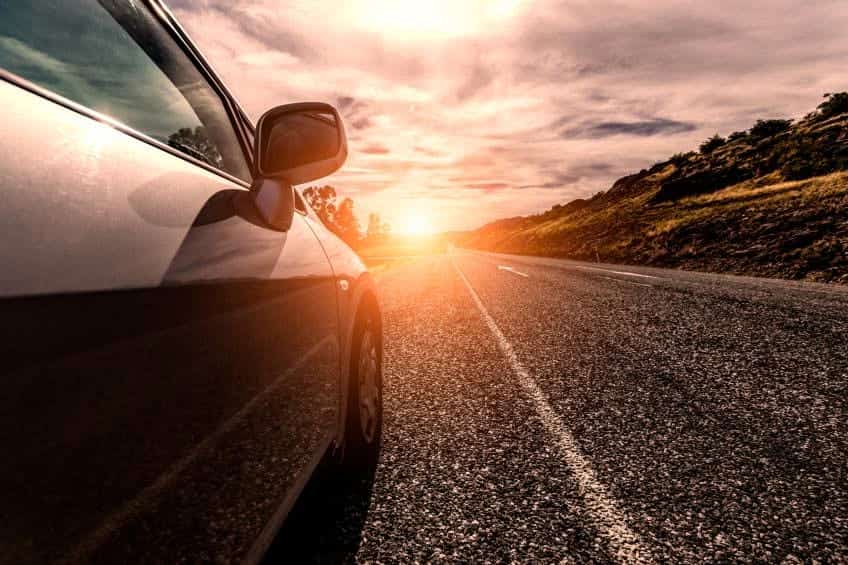
Direct glare comes straight from the sun. It peaks during the “golden hours” roughly 1 to 2 hours after sunrise and before sunset, when the sun sits low on the horizon and aligns almost perfectly with road level. Eastbound morning commuters and westbound evening commuters are most exposed.
Reflected glare bounces off wet pavement, other vehicles, guard rails, and your own dashboard. This type is unpredictable and can appear even on overcast days when the sun briefly breaks through.
Both types reduce contrast sensitivity, slow pupil response, and increase reaction time, all of which raise crash risk significantly. The National Highway Traffic Safety Administration (NHTSA) lists sun glare as a contributing environmental factor in thousands of reported collisions annually.
7 Ways to Reduce Sun Glare While Driving
1. Use Your Sun Visor Correctly
Your visor is the first line of defense and the most underused tool in your car. Most visors also swing to the side to address angled light coming through the driver’s window. The limitation: visors block a wide swath of your forward view and cannot address glare from side or rear windows at all.
2. Wear Polarized Sunglasses
Polarized lenses use a chemical filter to block horizontally oriented light waves, which is the orientation of most reflected glare off road surfaces. This makes them significantly more effective than standard tinted lenses. However, sunglasses only protect your eyes. They do nothing to reduce heat buildup, UV damage to your vehicle’s interior, or glare experienced by passengers.
3. Keep Your Windshield Clean
A film of road grime, oil haze, or interior off-gassing on your windshield scatters incoming light, dramatically amplifying glare. Clean both the inside and outside of all glass regularly. Use a dedicated automotive glass cleaner without ammonia, especially if you have tinted rear or side windows. (Ammonia degrades window film adhesive. See our auto window tinting aftercare guide for safe cleaning products.)
4. Adjust Following Distance and Speed
When glare is severe, increase your following distance and reduce speed. This gives you more time to react to hazards your eyes cannot clearly see. It is a safe driving practice, not a glare solution, but it reduces crash risk when other mitigation methods are not enough.
5. Use a Dashboard Anti-Glare Mat
Light-colored dashboards reflect sunlight upward into your windshield, creating secondary glare from below. A dark, matte dashboard mat eliminates this reflection source. It is inexpensive and effective for that specific problem but does nothing for direct solar glare.
6. Time Your Commute
If your schedule allows, shifting your drive time by 20 to 30 minutes can place the sun at a higher angle and dramatically reduce direct glare. Practical for some, impossible for most.
7. Install Professional Automotive Window Film
This is the only solution that works continuously, requires no action from the driver, protects all passengers, and addresses both direct and reflected glare simultaneously. Quality automotive window film reduces visible light transmission (VLT) to filter the intensity of incoming light before it reaches your eyes. It also rejects infrared (IR) radiation, the primary source of heat in your vehicle, and blocks up to 99% of ultraviolet (UV) rays that damage skin and fade interiors.
Professional Window Tinting in Newark, DE installs 3M automotive window films backed by a limited lifetime warranty. Our films are non-metalized and guaranteed not to interfere with GPS, cell phone signals, tire pressure sensors, or EZ-Pass transponders.
How Automotive Window Film Reduces Sun Glare: The Science
Window film reduces glare through two mechanisms: visible light reduction and infrared heat rejection.
Visible Light Transmission (VLT) is the percentage of visible light that passes through the combined film and glass. A lower VLT means less light reaches your eyes. A film with 35% VLT on a Maryland-registered vehicle, for example, allows 35% of visible light through while filtering out the remaining 65%, substantially reducing glare intensity without eliminating your ability to see the road.
Infrared (IR) rejection removes the heat component of sunlight. IR rays are the primary cause of the intense heat you feel radiating through untreated glass on a summer day. That heat affects your comfort and, when it causes squinting and visual strain, contributes indirectly to glare fatigue. High-performance films like 3M Crystalline reject significant levels of IR energy even at very light VLT levels, delivering heat and glare control without visibly darkening your windows.
UV rejection reaches up to 99% in professional-grade films, equivalent to approximately SPF 1000 of skin protection according to 3M. The Skin Cancer Foundation specifically endorses 3M’s automotive Color Stable and Crystalline product lines for UV protection.
Comparing Glare Reduction Methods
| Method | Glare Reduction | UV Protection | Heat Rejection | Passenger Coverage | Continuous (no driver action) |
|---|---|---|---|---|---|
| Sun visor | Partial (front only) | No | No | No | No |
| Polarized sunglasses | Good (driver only) | Yes (eyes only) | No | No | No |
| Clean windshield | Moderate (reduces scatter) | No | No | Yes | No (requires maintenance) |
| Dashboard mat | Partial (reflected only) | No | No | Yes | Yes |
| Automotive window film | Excellent (all windows) | Up to 99% | Yes | Yes | Yes |
Choosing the Right 3M Automotive Window Film for Glare Reduction
Not all window films perform equally. The right choice depends on your priorities, your vehicle, and your state’s legal VLT limits. Here is a breakdown of the 3M product lines Professional Window Tinting carries at our Newark, Delaware location.
Shop Film (Metalized, High-Performance Base)
This metalized film uses a vapor-deposited metal layer combined with dye to deliver strong performance. It features a charcoal tone that complements trucks, SUVs, and factory-tinted glass well. Available in 5%, 10%, 20%, 30%, and 40% VLT. Note: metalized films can occasionally interfere with electronics in some newer vehicles. Best suited for older vehicles or those without GPS and satellite antenna systems.
3M Color Stable
A non-metalized film that eliminates any risk of signal interference. Lifetime warranty against fading, cracking, peeling, bubbling, and color change. Recommended for full-vehicle tinting on newer vehicles with advanced electronics. Available in multiple VLT shades. Excellent glare reduction at a mid-range price point.
3M Crystalline
The premium option. 3M Crystalline uses a multi-layer nano-optical construction to reject significant levels of infrared heat at very light VLT levels. This matters for Delaware drivers: because Delaware law prohibits aftermarket tint on front side windows (see legal limits below), Crystalline lets you get maximum heat and glare control on rear glass while keeping your vehicle fully compliant. Starts at $499 and up depending on vehicle size. Learn more about what separates high-quality automotive window film from budget alternatives.
Clear UV Film
For drivers who want UV and heat protection without any visible darkening, clear automotive film blocks UV rays and rejects IR heat while leaving the glass optically transparent. This is particularly useful for Delaware front side windows, which cannot legally receive aftermarket tint, and for drivers who prefer the factory-glass look.
Window Tint Laws in Delaware and Maryland: What You Need to Know
Delaware and Maryland have different VLT requirements. Installing non-compliant tint creates legal risk and can result in fines and mandatory removal. At Professional Window Tinting, we know both states’ laws and will never install film that puts you out of compliance.
Delaware Tint Laws
Delaware prohibits aftermarket tint on front side windows for all vehicle types. Non-reflective tint is permitted above the manufacturer’s AS-1 line on the windshield. Rear side windows and the rear window may receive any darkness level. No metallic or mirrored tint is allowed on any window. Violations are subject to fines of $100 to $500 under Delaware Code Title 21, Section 4313A. A legal identification sticker is required between the film and glass on the driver’s side window.
Drivers with documented medical conditions can apply for a medical exemption through the Delaware DMV.
Maryland Tint Laws
Maryland requires a minimum 35% VLT on front side windows, rear side windows, and the rear window for sedan-class vehicles. For SUVs, vans, and class E trucks, the 35% VLT requirement applies to front side windows only; rear side windows and the rear window may receive any darkness. Windshield tint is limited to the top 5 inches or the AS-1 line, whichever is lower, and must be non-reflective. No red, yellow, amber, metallic, or mirrored film is permitted. Violations trigger a Safety Equipment Repair Order (SERO) with a $50 to $70 citation; ignoring an SERO can escalate to $1,000 in fines.
Note: Automotive tinting services are available at our Newark, Delaware location only. Our Baltimore location serves commercial and residential clients.
Delaware vs. Maryland Tint Law Quick Reference
| Window | Delaware (All Vehicles) | Maryland (Sedans) | Maryland (SUVs/Vans/Trucks) |
|---|---|---|---|
| Windshield | Non-reflective above AS-1 line only | Non-reflective, top 5″ or AS-1 line only | Non-reflective, top 5″ or AS-1 line only |
| Front side windows | No aftermarket tint permitted | 35% VLT minimum | 35% VLT minimum |
| Rear side windows | Any darkness | 35% VLT minimum | Any darkness |
| Rear window | Any darkness | 35% VLT minimum | Any darkness |
| Reflective/metallic film | Not permitted | Not permitted | Not permitted |
| Medical exemptions | Yes, via DE DMV | Yes, via MD State Police ASED | Yes, via MD State Police ASED |
Always verify current regulations with the Delaware DMV or Maryland Motor Vehicle Administration before installation. Laws are subject to change.
What to Expect During Automotive Window Tint Installation
The installation process at Professional Window Tinting is straightforward. Appointments take 1 to 2 hours depending on your vehicle and the number of windows being tinted. You are welcome to wait in our waiting room or drop off your vehicle for the day. We do not perform mobile automotive tinting; installation happens in our shop to prevent contamination from dust and debris during application.
After installation, plan to keep your windows rolled up for 2 to 4 days. The film cures over approximately 30 days, during which you may notice temporary haziness, bubbles, or streaks as the application solution evaporates. This is normal and resolves on its own. Do not clean tinted windows for the first 7 days, and when you do clean them, use a non-ammonia cleaner such as vinegar-based Windex or any citrus formulation. Full aftercare instructions are in our automotive window tint aftercare guide.
All of our automotive window films come with a lifetime warranty against fading, turning purple, cracking, peeling, bubbling, and delaminating. Our films are non-metalized and guaranteed not to interfere with electronic systems in your vehicle.
Frequently Asked Questions About Sun Glare and Window Tinting
Does window tint actually reduce sun glare while driving?
Yes, substantially. Automotive window film reduces visible light transmission (VLT), which directly lowers the intensity of light reaching your eyes. On rear and side windows, a quality film can filter out 60% or more of incoming visible light. Combined with infrared rejection, the overall reduction in visual strain and heat-related discomfort is significant. It is the only glare-reduction solution that operates continuously without any action from the driver.
Can I tint my front windshield to reduce glare?
In Delaware, you can apply non-reflective tint above the AS-1 line only. In Maryland, the same rule applies: non-reflective tint on the top 5 inches or above the AS-1 line. Neither state permits full windshield tinting. For front windshield glare, a high-performance clear UV and IR film applied to rear and side glass reduces the overall solar load in the cabin significantly, and polarized sunglasses remain the most effective tool for direct windshield glare specifically.
What is the best window tint for glare reduction without darkening the glass?
3M Crystalline is the top choice for maximum glare and heat control at light VLT levels. Its nano-optical construction rejects substantial infrared heat and a meaningful portion of visible light while remaining optically lighter than traditional dyed or metalized films. Clear UV-blocking film is also available for situations where you want no visible change to the glass at all. Visit our automotive window tint FAQ for more product comparisons.
Will window tint make it harder to see at night?
On rear and side windows with moderate VLT levels (35% or higher), most drivers experience minimal difference in nighttime visibility. Factory tint on many SUVs and trucks already sits in the 15% to 26% VLT range, so professionally applied film on rear glass with legal darkness levels is generally comparable to what you already experience. Front side windows in Delaware cannot receive aftermarket tint at all, which preserves night-driving visibility through those windows entirely.
How long does automotive window tinting last?
3M films installed by Professional Window Tinting carry a lifetime warranty against fading, purpling, cracking, peeling, and bubbling. The films are designed to last the life of the vehicle with proper care. Budget films from non-certified installers often use dye-based constructions that fade and turn purple within a few years. This is one of the key differences covered in our guide to high-quality vs. low-quality automotive window film.
How much does automotive window tinting cost in Newark, DE?
Pricing depends on vehicle size, number of windows, and film type. 3M Color Stable and Shop Film options are available at competitive mid-range pricing. 3M Crystalline starts at $499 and up for full-vehicle installation. Contact us for a free estimate specific to your vehicle.
Why Newark and Baltimore-Area Drivers Choose Professional Window Tinting
Professional Window Tinting has served the Mid-Atlantic for over 30 years. We are a woman-owned, family-run business and the only Premier 3M Certified Dealer in New Castle County and the surrounding region. As a certified 3M installer, we back every automotive installation with 3M’s limited lifetime warranty, one of the most comprehensive warranties in the industry.
We do not compete on price by cutting corners on product or process. Every automotive installation happens in our controlled shop environment to minimize dust contamination. We carry full 3M product lines, including Color Stable, Crystalline, and clear UV films, so we can match the right film to your vehicle, your state’s legal limits, and your budget.
We also serve homeowners and businesses throughout Newark, Wilmington, Baltimore, and the greater Mid-Atlantic for residential window film and commercial applications. Sun glare is a year-round problem on both sides of your glass.
Ready to stop fighting the sun on every commute? Get a free estimate from Professional Window Tinting today.
Newark, DE: (302) 456-3456 | 9 Albe Drive #A, Newark, DE 19702 (Auto, Commercial, Residential)