
C-Bond BRS (Ballistic Resistant System) is a patented nanotechnology film system that converts standard commercial glass into certified bullet resistant windows without replacing the glass. It is validated to meet National Institute of Justice (NIJ) Levels I, II, and IIA and Underwriters Laboratories UL 752 ballistic resistance standards. Professional Window Tinting installs C-Bond BRS systems for school, commercial, government, and institutional facilities throughout Delaware, Maryland, and the surrounding tri-state region.
Would you rather listen to our podcast? Click play below!
What Is C-Bond and Why Does It Matter for Commercial Security in 2026?
Most commercial buildings in Delaware and Maryland were constructed with standard annealed or tempered glass, which offers no resistance to ballistic threats, forced entry tools, or blast pressure. Full glass replacement with certified ballistic glazing costs $70 to $350+ per square foot depending on protection level, and carries significant structural retrofit requirements.
C-Bond BRS solves this problem differently. Rather than replacing glass, it uses a liquid nanotechnology solution applied directly to existing glass surfaces. The system includes a proprietary security film product and C-Bond Secure, a patent-protected nanotechnology film mounting solution. The nanotechnology targets the microscopic surface defects that occur naturally in glass, chemically bonding to those imperfections to increase both strength and flexibility before multi-layer security film is applied over the treated surface.
The result is a retrofit system that delivers certified ballistic resistance at a cost well below structural glass replacement. C-Bond’s patented technologies have been installed in more than 200 schools, government buildings, media sites, and other facilities around the country.
For facility managers in Wilmington, Newark, Baltimore, Annapolis, and the broader Delmarva corridor, this matters in 2026 because the demand for security glazing upgrades has accelerated significantly. Active shooter threats, smash-and-grab commercial crime, and blast events have pushed building security to the top of capital planning agendas across both states.
How C-Bond Nanotechnology Strengthens Glass at the Molecular Level
Standard glass contains microscopic surface flaws that act as stress concentrators. Under ballistic impact, these flaws propagate rapidly, causing catastrophic failure. C-Bond’s liquid nanotechnology penetrates and chemically bonds to those flaws before film installation, changing the mechanical behavior of the glass itself
What the process changes:
- Flexural strength is increased because bonded flaws can no longer initiate failure cracks under tensile stress.
- Impact energy dissipation is improved, allowing the glass to absorb more force before fracturing.
- Film-to-glass adhesion is dramatically superior to soap-and-water installation, the traditional method used for security film. C-Bond’s nanotechnology provides a superior bond between the window film and the glass compared to a typical soap and water application.
When the three-layer 15-mil security film is applied over the nanotechnology-treated surface, the combined system behaves as a unified ballistic barrier rather than a glass pane with film sitting on top of it. This distinction is what separates C-Bond BRS from standard security film installations and is what earns the system its ballistic certifications.
C-Bond BRS Certification Standards: What the Test Ratings Mean
Understanding the certification framework is essential for facility directors, architects, and risk managers making security procurement decisions.
There are three primary standards relevant to commercial installations:
UL 752: The Building Industry Ballistic Standard
UL 752 is one of the most widely used ballistic standards for buildings. Created by Underwriters Laboratories, it defines how well doors, windows, partitions, and security barriers can withstand firearm attacks. The standard includes 10 levels, starting at Level 1 for common handgun threats like a 9mm and moving up to Levels 8–10 for high-powered rifles and armor-piercing rounds.
UL 752 is the most common standard used because it is more modern and independently verified. It also considers the penetration as well as injuries that could be caused by the spall from ballistic penetration, and it is more directly relevant to the construction industry.
C-Bond BRS is validated to UL 752 standards. For the vast majority of commercial, school, and government applications in Delaware and Maryland, UL 752 Levels 1 through 3 address the most realistic threat scenarios, which include common handgun calibers.
NIJ Standards
C-Bond BRS is a ballistic resistant film system validated to pass National Institute of Justice (NIJ Level I, Level II, Level IIA) and Underwriters Laboratories (UL 752) ballistic resistance test standards. NIJ ratings were originally developed for body armor but are widely referenced in ballistic glazing specifications for law enforcement and government facilities.
ASTM F3561-22: The Forced-Entry-After-Attack Standard
This is a standard the original article does not address, and it is increasingly required in school and government specifications. ASTM F3561-22 evaluates a barrier’s ability to resist forced entry after it has been subjected to a simulated active shooter attack. It addresses a crucial real-world scenario where someone might shoot out a portion of a door or window to then gain access. The goal is not to stop the bullet itself, but to ensure the barrier remains intact to prevent a physical breach and delay entry.
C-Bond BRS, by design, keeps glazing structurally coherent after ballistic impact, making it directly relevant to ASTM F3561-22 compliance discussions. Facility managers procuring security glazing in 2026 should confirm whether their specifications require ASTM F3561-22 in addition to UL 752.
Ballistic Level Comparison Table
| UL 752 Level | Threat Caliber | Typical Application |
| Level 1 | 9mm handgun (3 shots) | Retail, school reception, commercial offices |
| Level 2 | .357 Magnum (3 shots) | Banks, jewelry stores, higher-risk commercial |
| Level 3 | .44 Magnum (3 shots) | Government offices, law enforcement facilities |
| Level 4 | .30-cal rifle (1 shot) | High-security government, military facilities |
| Level 5–8 | High-power rifles, sustained fire | Critical infrastructure, embassies |
For mostcommercial and institutional clients, Levels 1–3 represent the appropriate specification range. We can assess your facility and recommend the correct protection level based on a site-specific threat analysis.
Bullet Resistant vs. Bulletproof vs. Ballistic Glass: Precise Definitions
These terms appear interchangeably in commercial and retail contexts, but they have technically distinct meanings. Using the wrong term in a procurement specification or insurance filing creates problems.
- Bullet resistant: A tested, certified window system rated to stop defined ballistic threats to a specific UL 752 or NIJ level. The correct term for all certified glazing systems, including C-Bond BRS. No window stops every threat; performance depends on caliber, velocity, and number of rounds.
- Bulletproof: A colloquial and technically inaccurate term. There is no truly 100% “bulletproof” material. All protective glazing or armor is rated for specific threat levels, and even the strongest materials only resist defined rounds and may fail under more powerful ammunition or repeated hits. Avoid this term in formal specifications.
- Ballistic glass: A descriptor for any glazing system engineered to resist projectile penetration. C-Bond BRS qualifies as a ballistic glass system when properly installed on suitable glass types.
- Security film (standard): Polyester film applied to glass to hold shards together after breakage and delay forced entry. Standard security film does not provide ballistic resistance. C-Bond Secure, without the BRS multi-layer film component, is a forced-entry deterrent, not a ballistic barrier.
The distinction between forced-entry resistance and ballistic resistance is critical for specifying the correct system. Professional Window Tinting’s security window film services cover both applications, and the consultation process always begins with a site-specific threat assessment to match the right solution to the actual risk.
Comparison: C-Bond BRS vs. Standard Security Film vs. Replacement Ballistic Glazing
| Factor | C-Bond BRS (Retrofit) | Standard Security Film | Replacement Ballistic Glass |
| Ballistic certification | UL 752, NIJ Levels I–III | None | UL 752 (varies by product) |
| Forced entry resistance | High | Moderate | Very high |
| Requires glass replacement | No | No | Yes |
| Disruption to operations | Minimal | Minimal | Significant |
| Cost range (installed) | $15–$50/sq ft (film system) | $8–$15/sq ft | $70–$350+/sq ft |
| Frame/structural changes | Rarely needed | Not needed | Often required |
| Transparency preserved | Yes | Yes | Yes (with some haze at high levels) |
| One-way ballistic capacity | Yes (shoot out, protected inside) | No | Varies by product |
The retrofit cost advantage of C-Bond BRS over full glazing replacement is substantial. For a school district upgrading 50 windows, the difference between a $15–$50/sq ft retrofit and a $150/sq ft replacement can represent hundreds of thousands of dollars, most of which is directly applicable to other security investments.
Who Needs C-Bond Bullet Resistant Windows?
Commercial Businesses
Retail storefronts, pharmacies, convenience stores, and financial service offices in Wilmington, Newark, Dover, Baltimore, and Annapolis face realistic threats from smash-and-grab incidents and armed robbery. Standard glass offers no meaningful delay. C-Bond BRS deployed at entry points and transaction windows delivers certified ballistic resistance without the cost or disruption of full building renovation.
Commercial window film services from Professional Window Tinting address the full spectrum of commercial security glazing needs across both states.
K-12 Schools and Universities
This is the most active market segment for security glazing retrofits in 2026. Delaware and Maryland school districts have federal funding mechanisms available through the Bipartisan Safer Communities Act, which allocated $1 billion for Safe Schools programs with funds available through December 2026. Physical security upgrades including glazing are eligible uses under several grant categories. Facility directors should confirm current guidance with their state education agency.
C-Bond’s patented technologies have been installed in more than 200 schools, government buildings, media sites, and other facilities across the country. Schools represent a priority deployment environment because the combination of large glass-panel entryways and high occupancy creates significant vulnerability during a breach event.
Key advantages for school facilities:
- Retrofit without relocating students or staff during installation
- Compatible with existing door and window frames in the vast majority of installations
- Meets the ASTM F3561-22 post-attack forced entry standard that is increasingly required in school safety specifications
- Substantially lower cost than window replacement, preserving budget for complementary security measures such as access control and camera systems
Government Buildings
C-Bond BRS offers unparalleled security glass alternatives in office buildings, schools, municipal buildings, government buildings, and commercial establishments. For Delaware and Maryland government facilities, ballistic glazing upgrades at public-facing counters, lobbies, and first-floor perimeters represent a baseline security requirement in many current facility assessments.
Professional Window Tinting’s government building security services are designed specifically for the procurement, specification, and installation requirements of municipal and state government clients in this region.
Religious Institutions and Houses of Worship
Threats targeting houses of worship have driven significant demand for ballistic glazing upgrades across the Mid-Atlantic. C-Bond BRS systems were sought by synagogues and other religious facilities amid threats related to the Israel-Hamas war, with the company emphasizing the importance of protecting buildings used for learning and worship in today’s conflict-prone environment. C-Bond BRS provides certified ballistic protection at a cost that most congregations can fund without large capital campaigns.
Healthcare Facilities
Emergency departments, psychiatric units, and pharmacy windows face forced-entry and ballistic threats at elevated rates. C-Bond BRS on high-risk transaction points and entry doors provides both ballistic resistance and forced-entry delay.
C-Bond BRS: Comprehensive Threat Protection Beyond Bullets
Ballistic resistance is the primary certification, but the ballistic qualities of powerfully enhanced toughened glass also protect against the force of a bomb blast or intense strike force like a hammer or crowbar.

The full threat profile C-Bond BRS addresses:
- Ballistic impact from handgun calibers (certified) and rifle-level threats (dependent on glass type and installation parameters)
- Bomb blast and overpressure events, relevant to government buildings, transit facilities, and high-profile commercial addresses
- Smash-and-grab forced entry using hand tools, hammers, and crowbars
- Hurricane and severe weather glass failure, relevant for coastal and Chesapeake Bay area installations
- UV and solar heat gain reduction, which many security film systems provide as an ancillary benefit
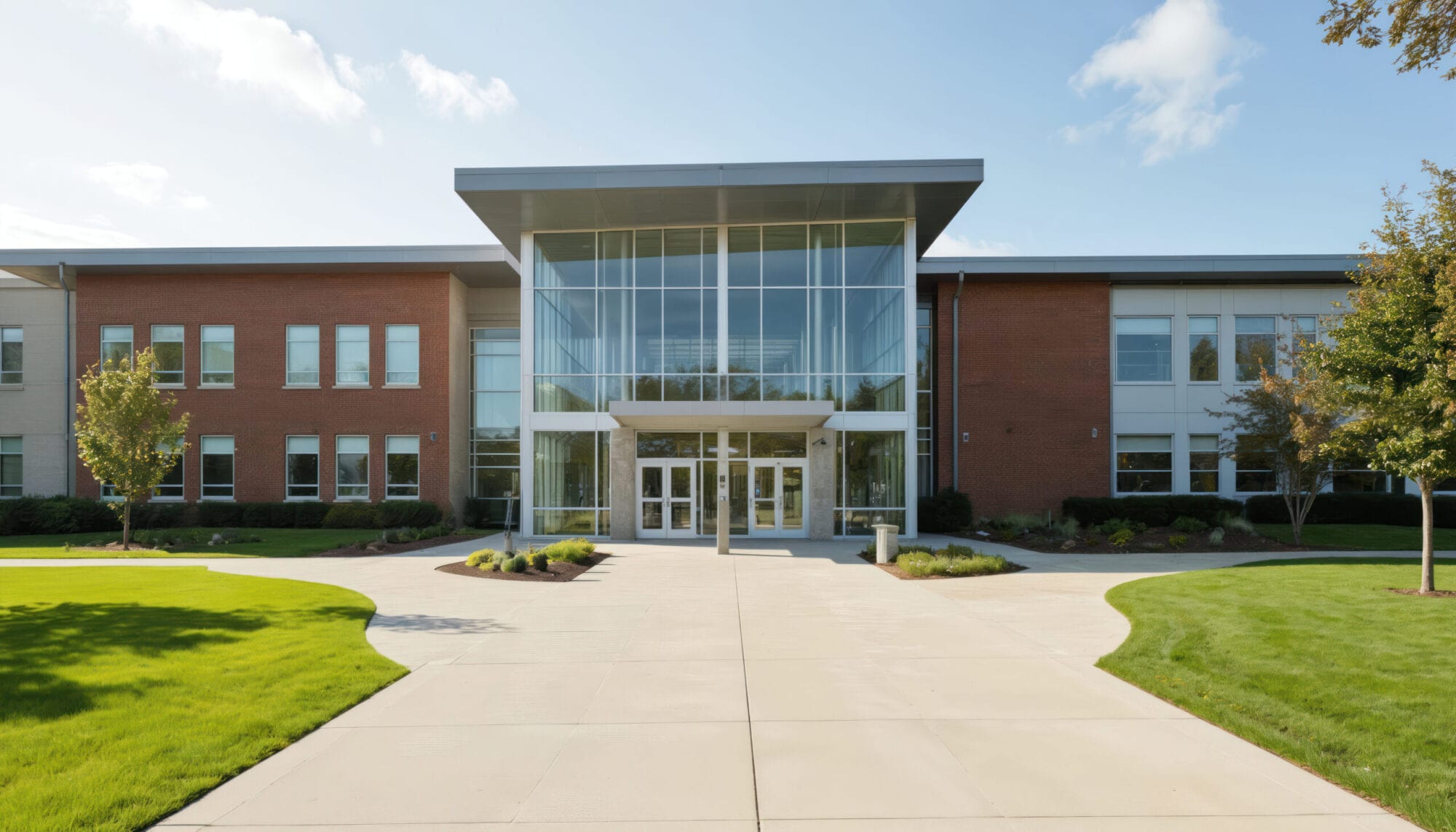
For facilities that need to address both security and energy efficiency in a single upgrade, a combination of security and sun control solutions provides a coordinated approach.
One-Way Ballistic Capacity: A Critical Feature for Law Enforcement Environments
C-Bond BRS provides unique one-way ballistic capacity for shooting outward while being protected inside. If needed, security or police can shoot outward and still have the advantage of maximum protection behind the security glass.
This feature is directly relevant for police station transaction windows, court facilities, and any environment where law enforcement personnel operate behind glass. It is not a feature available in most standard ballistic glazing products and represents a meaningful operational advantage for public safety facilities in Delaware and Maryland.
The C-Bond BRS Installation Process at Professional Window Tinting
Professional Window Tinting uses a certified multi-step installation process. No shortcuts in the C-Bond BRS process are acceptable because the ballistic certification depends on procedural compliance during application.
- Step 1: Site assessment and threat analysis A security consultant evaluates the facility, identifies vulnerable glazing positions, documents glass type and dimensions, and recommends the appropriate protection level for each location.
- Step 2: Glass preparation All glass surfaces are cleaned and inspected. Contamination, scratches, or existing film coatings that would compromise adhesion are addressed before application.
- Step 3: C-Bond nanotechnology solution application The liquid nanotechnology primer is applied to the glass surface, penetrating and chemically bonding to microscopic surface defects. This is the step that differentiates C-Bond from every other security film installation method.
- Step 4: Multi-layer film installation Three layers of 15-mil pre-cut proprietary security film are applied in a specific multi-step sequence. Film is pre-cut to window measurements to ensure full coverage without gaps.
- Step 5: Compliance verification The completed installation is inspected against the procedural standards required to maintain the UL 752 and NIJ certification claims.
- Step 6: Client walkthrough and documentation Facility managers receive documentation of completed work, materials used, and applicable certifications for insurance and compliance records.This process applies to C-Bond installations at commercial, government, school, and residential properties served by Professional Window Tinting across Delaware and Maryland.
- Let Professional Window Tintng Transform Your Existing Glass into Bullet Resistant Windows
Myths and Facts About Bullet Resistant Glass in 2026
Myth: Security film makes glass bulletproof. Fact: Standard security film holds shattered glass together and delays forced entry. It does not stop bullets. Only C-Bond BRS multi-layer film installed with the nanotechnology solution achieves ballistic certification.
Myth: Bullet resistant means bulletproof. Fact: All bullet resistant glazing is rated to specific calibers and shot counts. Even the strongest materials only resist defined rounds and may fail under more powerful ammunition or repeated hits.
Myth: You need to replace your windows to get ballistic protection. Fact: C-Bond BRS retrofits existing glass in most commercial building configurations without frame modification. It can be installed on existing glass surfaces or retrofitted into existing framing systems without the additional cost for structural changes.
Myth: All ballistic film products are equivalent. Fact: Ballistic performance depends entirely on the complete system, the nanotechnology primer, the specific film product, and proper installation procedure. Film sold without the C-Bond nanotechnology component and multi-step certification process does not carry the same ballistic credentials.Myth: Bullet resistant glass is always visible or distorting. Fact: C-Bond BRS maintains optical clarity. The film is low-profile and preserves the appearance of existing windows.
C-Bond BRS Cost Overview: Commercial Projects in Delaware and Maryland Explained
Pricing for C-Bond BRS installations depends on the number of windows, glass type, building access complexity, and protection level required. As general market reference points in 2026:
- Standard security film (no ballistic rating): $8–$15 per square foot installed
- C-Bond BRS system (ballistic certified retrofit): approximately $15–$50 per square foot depending on system specification and site conditions
- Full replacement ballistic glazing: $30–$350+ per square foot, depending on protection level, material, and installation requirements.
For a transaction window, small storefront, or school entry:
- Small system (single transaction window): $7,000–$10,000+ fully installed
- Mid-size commercial deployment (multiple windows): $15,000–$30,000+ depending on scope
These figures are market reference ranges. A precise project quote requires a site visit and glass assessment. Request a security glazing consultation and quote from Professional Window Tinting to get a project-specific number for your Delaware or Maryland facility.
C-Bond BRS vs. Scotchshield Security Film: Choosing the Right System
Professional Window Tinting installs both C-Bond BRS and 3M Scotchshield Security Window Films. These are not competing solutions but complementary products serving different threat levels and budget requirements.
| Factor | C-Bond BRS | Scotchshield Security Film |
| Ballistic certification | Yes (UL 752, NIJ) | Not ballistic rated |
| Primary function | Bullet resistance and forced entry delay | Forced entry delay, shatter containment |
| Best for | Schools, government, high-risk commercial | Retail, office, residential high-security |
| Cost position | Higher | More accessible |
| Glass replacement needed | No | No |
For facilities that need forced entry deterrence without a ballistic requirement, Scotchshield provides strong protection at a lower price point. For facilities that need certified ballistic resistance, C-Bond BRS is the correct specification. Attachment systems can be added to either film installation to mechanically anchor the film to the window frame, which significantly increases the delay time for forced entry events and is recommended for school and government deployments.
Frequently Asked Question About C-Bond BRS
What is C-Bond BRS and how does it make glass bullet resistant?
C-Bond BRS is a multi-layer ballistic film system combined with a patented liquid nanotechnology primer. The primer chemically bonds to microscopic surface defects in existing glass, increasing strength and flexibility. Three layers of 15-mil security film are then applied over the treated surface. The combined system is independently validated to stop high-velocity projectiles without penetrating the glass, meeting UL 752 and NIJ ballistic standards.
Is C-Bond BRS bulletproof?
No certified glazing is bulletproof. C-Bond BRS is bullet resistant, meaning it is validated to stop defined ballistic threats at specified UL 752 and NIJ levels. Performance depends on the caliber and velocity of the round and the number of shots fired. Higher UL 752 levels provide protection against more powerful firearms.
How much does C-Bond bullet resistant window installation cost in Delaware or Maryland?
C-Bond BRS installations in the Delaware and Maryland region typically range from $15 to $50 per square foot for the film system, compared to $70–$350+ per square foot for full ballistic glass replacement. Complete project costs depend on window count, size, glass type, and access requirements. Contact Professional Window Tinting for a site-specific quote.
Does installing C-Bond BRS require replacing existing windows?
No. C-Bond BRS is a retrofit system designed to install on existing glass surfaces within existing frames. In most commercial applications, no structural modifications are required.
What certifications does C-Bond BRS carry?
C-Bond BRS is validated by independent third-party laboratories to meet National Institute of Justice (NIJ) Levels I, II, IIA, and III, and Underwriters Laboratories (UL) 752 ballistic resistance test standards. These are the primary ballistic standards applied to commercial building security glazing in the United States.
Is bullet resistant glass legal for commercial buildings in Delaware and Maryland?
Yes. There are no state-level restrictions in Delaware or Maryland on installing bullet resistant glazing in commercial, government, or institutional buildings. Some municipalities may require permits for commercial building modifications; Professional Window Tinting handles the permitting assessment for each project.
How long does a C-Bond BRS installation take?
Most commercial installations are completed in one to two days with minimal operational disruption. Installations are typically completed without requiring the building to vacate, though specific areas may need to be temporarily cleared during application.
Can C-Bond BRS also address forced entry threats?
es. The multi-layer film system and nanotechnology-strengthened glass significantly delays forced entry from hand tools and blunt impact. Adding attachment systems to the installation further increases forced entry resistance by mechanically anchoring the film to the frame.
Does C-Bond BRS work on all glass types?
C-Bond BRS is compatible with the majority of commercial glass types including annealed, tempered, and insulated glazing units. Glass condition, type, and thickness are assessed during the site consultation to confirm compatibility before installation.
How does C-Bond BRS compare to replacing windows with laminated ballistic glass?
C-Bond BRS provides certified ballistic resistance at a fraction of the cost of replacement ballistic glazing, without structural modifications or extended construction disruption. Replacement ballistic glass typically costs $70–$350+ per square foot and requires frame and structural upgrades in many older buildings. C-Bond BRS is the cost-effective path to ballistic certification for most existing commercial and institutional facilities.
Why Professional Window Tinting Security Glass?
Professional Window Tinting has served commercial, government, residential, and institutional clients across Delaware, Maryland, Pennsylvania, and New Jersey for more than 35 years. The company operates dedicated locations in Newark, DE and Baltimore, MD, both serving the regional commercial and government security glazing market.
Window tinting services in Baltimore, MD and window tinting services in Newark, DE include the full range of security, solar, decorative, and specialty film applications for commercial and government clients.
Every C-Bond BRS installation includes certified installation procedures, proper documentation for insurance and compliance records, and the backing of a company with decades of verified commercial work across the Mid-Atlantic region. Contact Professional Window Tinting to schedule a security assessment, or request a project quote online for any commercial, government, or institutional security glazing project.
Citations and Sources
- C-Bond Systems, Inc. (OTC: CBNT). C-Bond BRS Product Page and Validation Testing. cbondsystems.com/patriot-glass-solutions/
- Patriot Glass Solutions. C-Bond BRS Ballistic Resistant System. patriotglasssolutions.com/products/c-bond-brs-security-glass/
- GlobeNewswire. C-Bond Systems’ Patriot Glass Solutions Subsidiary Awarded $400,000 Installation at Texas University. October 1, 2024. globenewswire.com
- Underwriters Laboratories. UL 752: Standard for Bullet-Resisting Equipment. ul.com
- National Institute of Justice. NIJ Standard 0108.01: Ballistic Resistant Protective Materials. nij.gov
- ASTM International. ASTM F3561-22: Standard Test Method for Forced Entry Resistance of Window and Door Systems After Simulated Active Shooter Attack. astm.org
- Mannlee CW. UL 752, NIJ and ASTM: Bullet-Resistant Glass Standards 2026. mannleecw.com. December 2025.
- Angi. How Much Does Window Security Film Installation Cost? 2026 Data. angi.com. March 2026.
- Mannlee CW. How Much Does Bulletproof Glass Cost? 2026. mannleecw.com. December 2025.
- Total Security Solutions. Cost and Uses of Bulletproof Glass and Ballistic Window Film. tssbulletproof.com. July 2025.
- U.S. Congress. Bipartisan Safer Communities Act (S.2938, 117th Congress), Safe Schools Funding Provisions. congress.gov
- Education Week. Congress Passed $1B for School Safety. July 2023. edweek.org
Professional Window Tinting is a family-run and woman-owned business, proudly serving the MD, DE, PA, and NJ region for over 30 years. To get your free quote on commercial, residential, or automotive solar window film, give us a call at (302) 456-3456 or fill out a form online.